However, Stasiškienė points to a pressing challenge: municipalities often have large amounts of data, but it is fragmented across different institutions and sectors.
“Together with scientists from the Massachusetts Institute of Technology (MIT), we will seek to harmonise data on urban energy consumption, fuel use, construction material flows, waste, the building stock and mobility patterns, and link it to social and economic indicators,” says Stasiškienė.
Assessing Different Scenarios
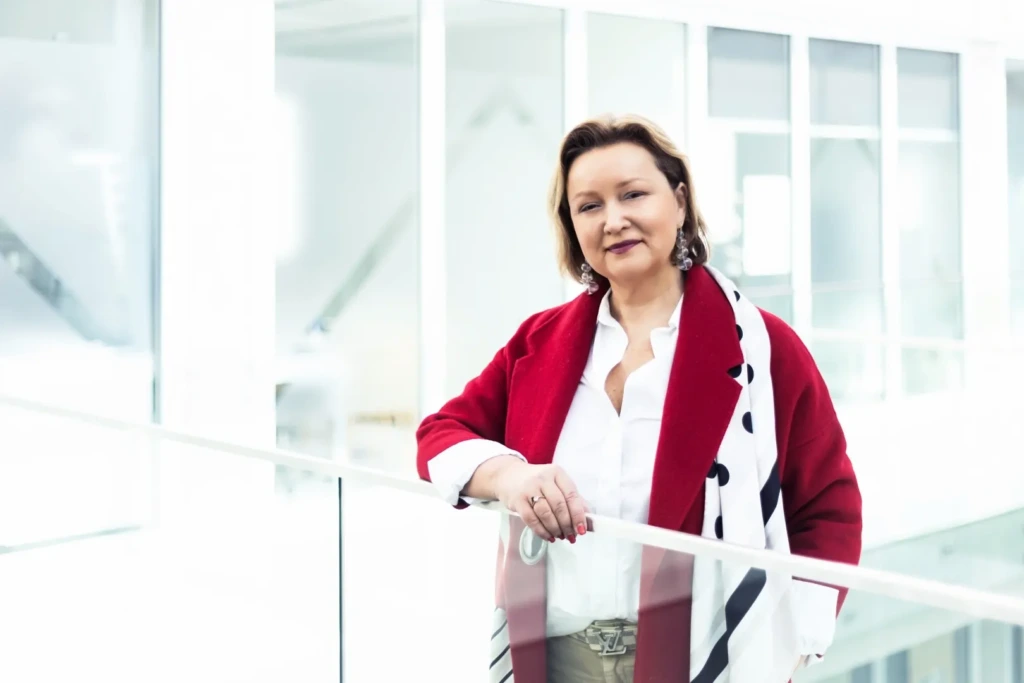
According to the Director of the KTU Institute of Environmental Engineering, data-driven planning makes it possible to move from asking “what would we like to do?” to asking “which solution, based on the data, would deliver the greatest environmental and economic benefits?”
“I believe that this shift will be very important for the next generation of urban management,” says Stasiškienė.
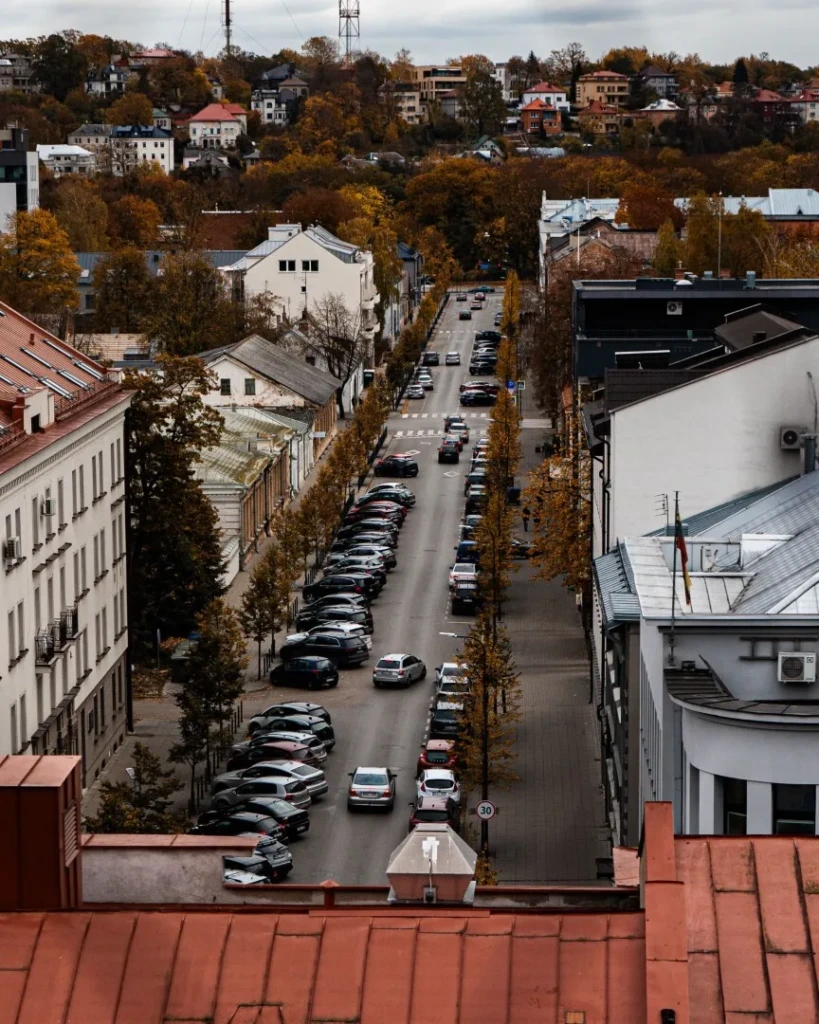
The KTU professor compares a city to a living organism: for it to function, energy, fuel, water, food, construction materials and various products need to enter the city, while waste, wastewater, greenhouse gases and other pollutants need to leave it. At the same time, certain material resources continuously accumulate in the city – in buildings, infrastructure and the transport system.
“Urban metabolism analysis makes it possible to quantify these flows, link them together and see the city as a single system rather than as separate sectors: transport, energy, buildings or waste. This is precisely the approach envisaged by the KTU–MIT project: at the scale of a selected Lithuanian city, we will analyse energy, material and waste flows in the building, industrial, transport and household sectors,” Stasiškienė explains.
However, the scientists will not stop there. Traditional urban metabolism analysis usually shows what is happening now, whereas in this project the researchers will seek to link it with scenarios showing what could happen if a city adopted different solutions. For example, it could increase the use of secondary construction materials, electrify transport, improve the energy efficiency of buildings or develop industrial symbiosis systems.
“The ultimate goal is not simply to collect more data. The goal is to help a city understand which changes would have the greatest impact on achieving climate neutrality,” says Stasiškienė.
One Lithuanian Municipality to Become a Pilot Site
Stasiškienė notes that Lithuanian cities have considerable amounts of data, but do not yet make sufficient use of it or integrate it effectively. Cities collect data on energy, buildings, waste, transport and other sectors, while some are developing Climate City Contracts or climate neutrality strategies.
“However, there is still a lack of integrated tools that can be easily adapted by municipalities and that bring together material flows, energy, circular economy solutions and possible climate neutrality scenarios within a single system,” says Stasiškienė.
For this reason, one of the key tasks of the KTU and MIT researchers will be to develop a methodology that is realistic even for municipalities with limited data and analytical capacities.
“This is very important to me: a smart city is not the one that has the most data. A smart city is that one which can turn data into decisions,” Stasiškienė points out.
The Director of the KTU Institute of Environmental Engineering sees Lithuanian cities as highly suitable living laboratories for climate neutrality solutions. Therefore, as part of the joint KTU–MIT project, one Lithuanian municipality is planned to serve as a pilot environment where an initial urban metabolism balance will be developed and intervention scenarios tested.
“Our cities are relatively small, so innovations can be tested at the urban scale comparatively quickly. At the same time, they have developed infrastructure, universities and a technology sector, and are integrated into the EU climate policy framework,” says Stasiškienė. “Lithuania can be not only an implementer of European climate policy, but also a place where solutions are developed and tested before being transferred to other European cities.”
The Goal: Better Quality of Life in Cities
In the selected Lithuanian city, the researchers plan to analyse energy consumption, fuel use, the building stock, mobility trends, flows of construction materials and waste, as well as emissions associated with the city’s main systems.
“Later, together with the municipality, we will select two or three priority areas for intervention. Possible options include the circular use of construction materials, industrial symbiosis, the electrification of transport and other urban systems, greater use of renewable energy, low-carbon mobility, and turning waste into resources. The key question will not only be ‘how much CO₂ will we reduce?’, but also how one solution will affect other resource flows within the city,” says Stasiškienė.
A smart city is not the one that has the most data. A smart city is that one which can turn data into decisions.
If the data show that the greatest potential for reducing emissions and energy consumption lies in a particular type of building, the city can target its renovation programmes more precisely. If mobility is identified as the main challenge, investment in public transport, electrification or other low-carbon mobility solutions can be better justified. If a significant share of resources is lost within the waste management system, more effective reuse and recycling chains can be developed.
“Residents should feel the results of decisions made based on the model we develop. This could mean lower energy costs, more convenient mobility, a cleaner environment and more efficient public services. Climate neutrality must not be perceived merely as a CO₂ reduction target. The ultimate result must be a better quality of life in the city,” says the Director of the KTU Institute of Environmental Engineering.
Building a Long-Term Research Partnership
KTU is carrying out a joint project with scientists from the United States through the MIT International Science and Technology Initiatives (MISTI) Global Seed Fund programme, facilitated by the Lithuanian Consortium for cooperation with MIT. According to Stasiškiene, this joint project primarily confirms the international recognition of KTU’s research expertise. It also provides an opportunity to build a long-term working partnership with MIT in one of the strategically important areas – the transformation of cities towards climate neutrality and sustainability.
The project will be jointly implemented by the KTU Institute of Environmental Engineering and the MIT Center for Sustainability Science and Strategy, led by Prof. Sergey Paltsev.
“What is personally very important to me is that this is not a one-off project. We see the funding from the Massachusetts Institute of Technology’s international science and technology initiatives (MISTI) programme as a starting platform for a larger KTU–MIT research collaboration programme – an investment in a long-term scientific partnership,” says Stasiškienė.
According to her, the strength of this collaboration lies in the complementarity of expertise.
“We will be able to combine KTU’s ability to work with a specific city and its real-world data with MIT’s experience in systems modelling and global transformation scenarios,” says the Director of the KTU Institute of Environmental Engineering.